
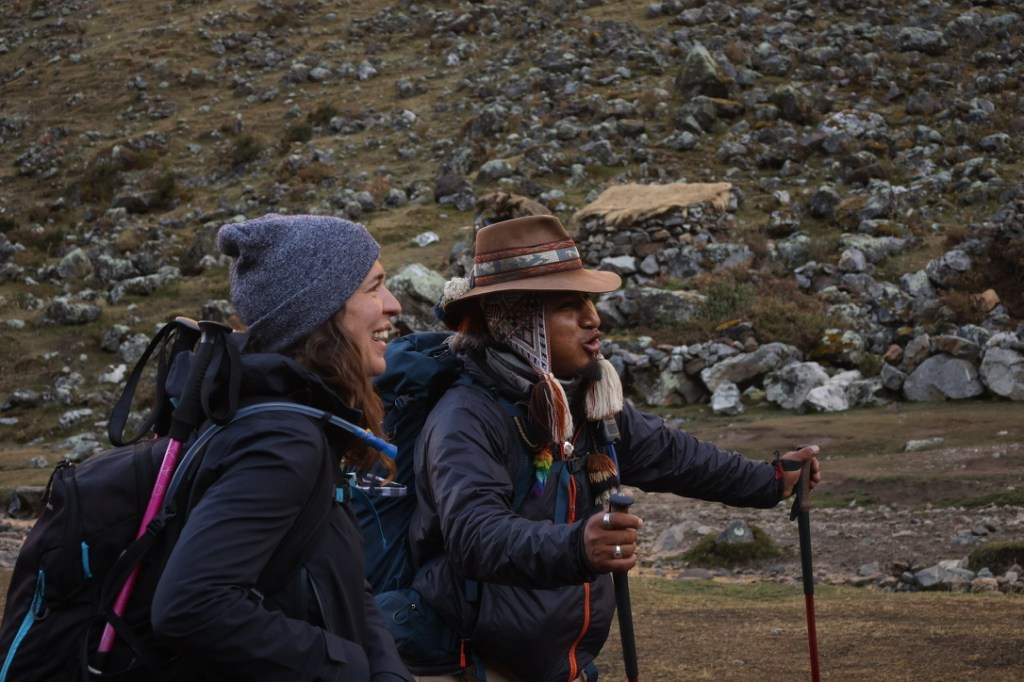
It’s day one of the Salkantay Trek in Peru’s south, about three hours outside of Cusco. Our trekking group of 10 has spent the last three hours half-asleep on a medium-sized coach bus, after a shocking four a.m. pickup. All of us, except our partners or the friends we are traveling with, are strangers to each other.
As we get off the bus, at the start of the hike in Challacancha, our guide makes us stand in a circle and introduce ourselves. Despite asking what our preferred nicknames are, it turns into Alex, our guide, assigning us a nickname he likes better, and what will become our trail name for the next five days.
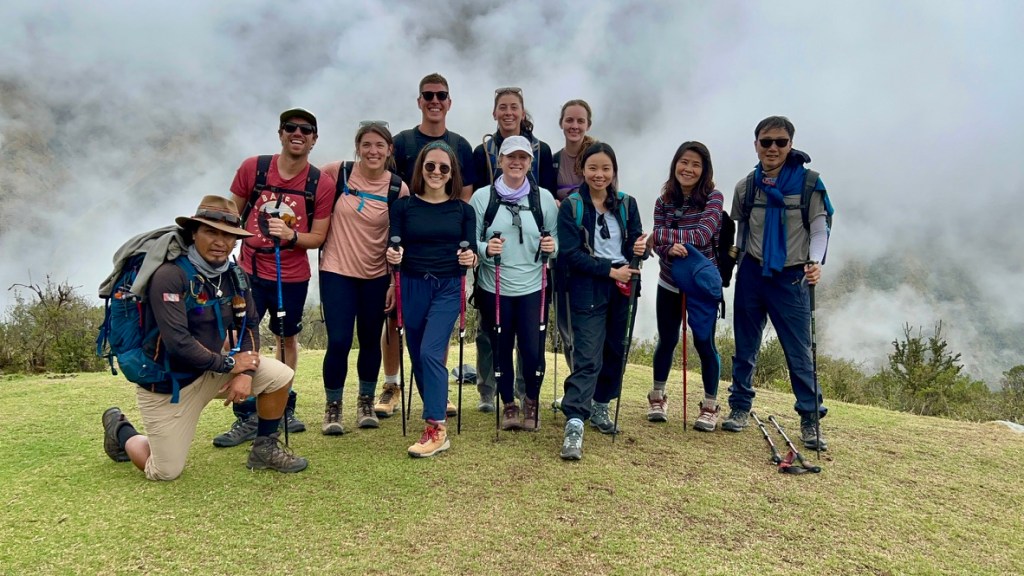
But nicknames aside, the whole exercise, he explains, is to get to know our ‘family.’ A ‘family’ that will bond over the next five days as we challenge ourselves through five days of grueling altitude hiking for the reward of seeing Machu Picchu at the finish line.
The concept of bonding well enough with 10 strangers over five days to call them ‘family’ might seem bizarre. But the intensity of adventure travel has the power to make it feel that way – bloodlines or not.
Our ‘mountain lion,’ Alex the guide’s nickname, wraps up the introductions and we head towards the trailhead. Silence ensues at first, as we march uphill on what we’ll learn to discover means “Inca flat.” We collectively catch our breath. But as the trail starts to level out, initial introductory chats about where we are from, what we do for a living and what our trip plans are start to emerge.
Meeting people while traveling is not a new concept. In fact, many people travel because of the benefit of making new connections. In a 2022 Exodus Travel survey, over 66% of respondents said meeting new people while on a trip leads to a much better experience. The survey even found “77% of respondents said they made lifelong friendships on the road, while 23% met their spouse on a trip, one third (33%) reported a ‘vacation romance,’ and a quarter (25%) currently claims a best friend encountered on the road.”
It’s unsurprising to bond with fellow travelers over the very topic that brought us all to the same place: travel. But adventure or activity-based travel tends to accelerate the barrier to entry to striking up a conversation with someone new. In the same survey, many people cited “participation in a variety of activities (31%)’ and ‘engagement in sports, active hobbies, and other physical activities (27%)’ as two of the key ways for meeting people and socializing on trips.
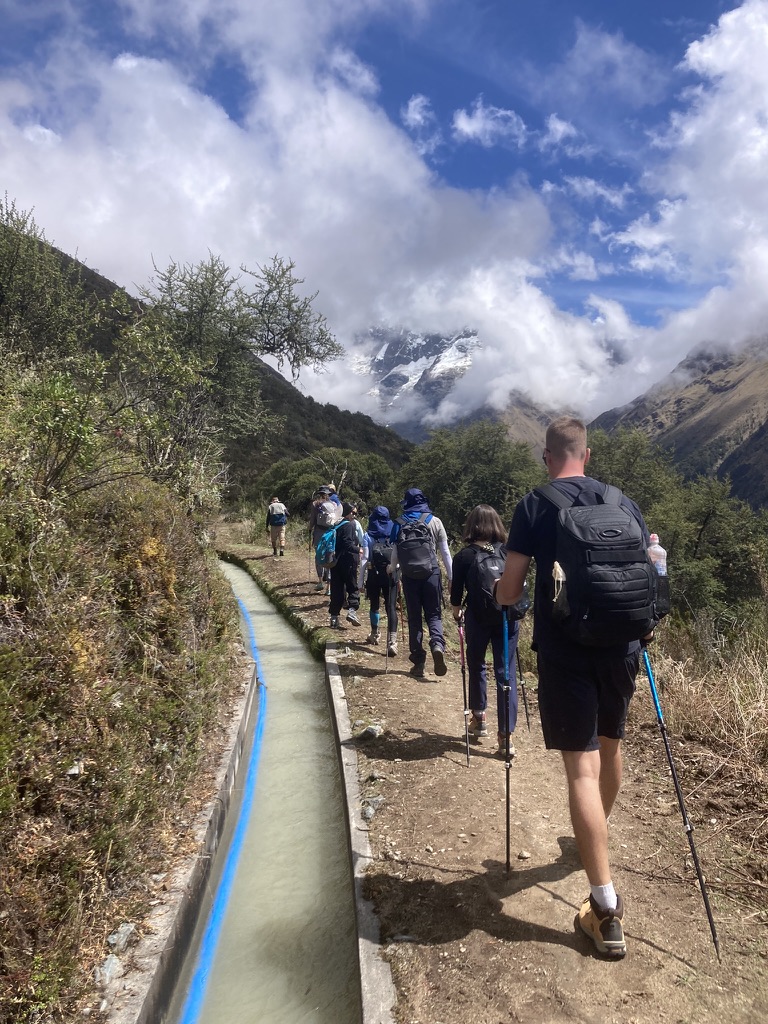
With each passing step on the Salkantay Trek, it was clear we had the benefit of time to make space for conversation, untethered from wifi and screens in the remote Peruvian Andes, with only one job at hand: to walk.
As beautiful as the Andean surrounds were, every person in the group prioritized conversation to pass the time. As we passed through valleys, criss-crossed over rivers and wound our way over Salkantay Pass, we went from small talk to in-depth family histories, dreams for the future and mundane but relatable topics like our favourite cereals.
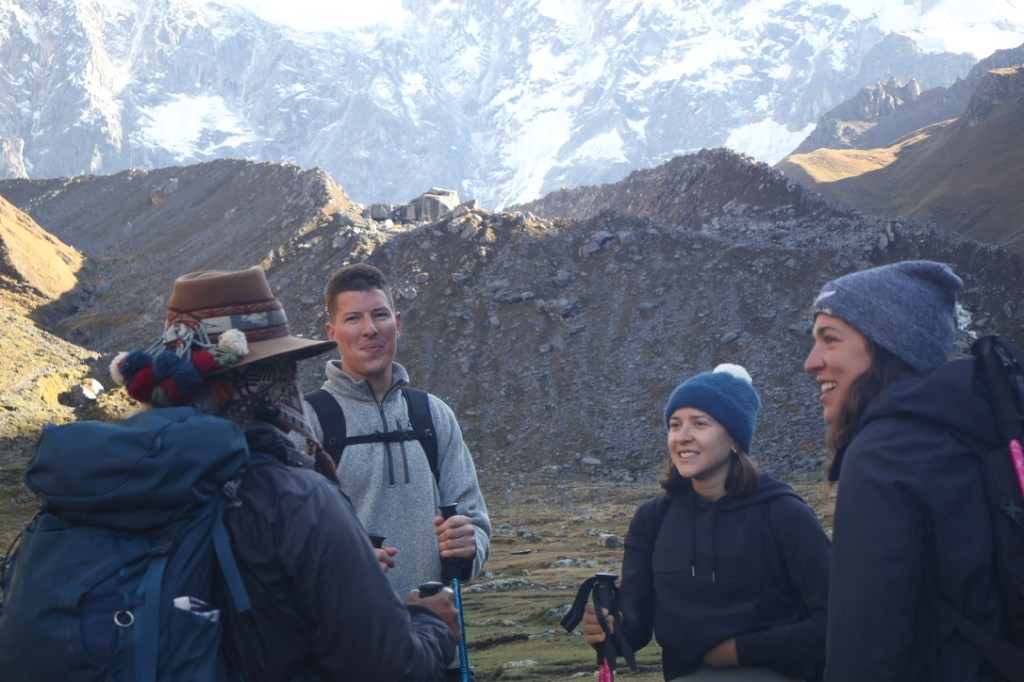
On that first afternoon, as I wandered downhill from our side trip to Humantay Lake, I found myself in lock step with a new acquaintance, Marquita. Similar in age, but living on opposite sides of the globe in Idaho and Sydney, we dove into an hour-long chat zig-zagging from the most gruesome gun wound victims she’s treated in her role as a Resident Assistant to her brother’s career trajectories from a car mechanic to software developer.
Not being distracted and in a remote part of Peru, it seemed we could press pause on the outside world and dive straight into conversations we’d probably be too reserved to have in our day-to-day lives.
By day three of our trek, three people on our trip started to experience flu-like symptoms and travel belly, making it unclear if they’d be able to carry on that day. Despite needing to run to the toilet throughout breakfast, and the ghostly tinge on their faces, they decided to persevere.
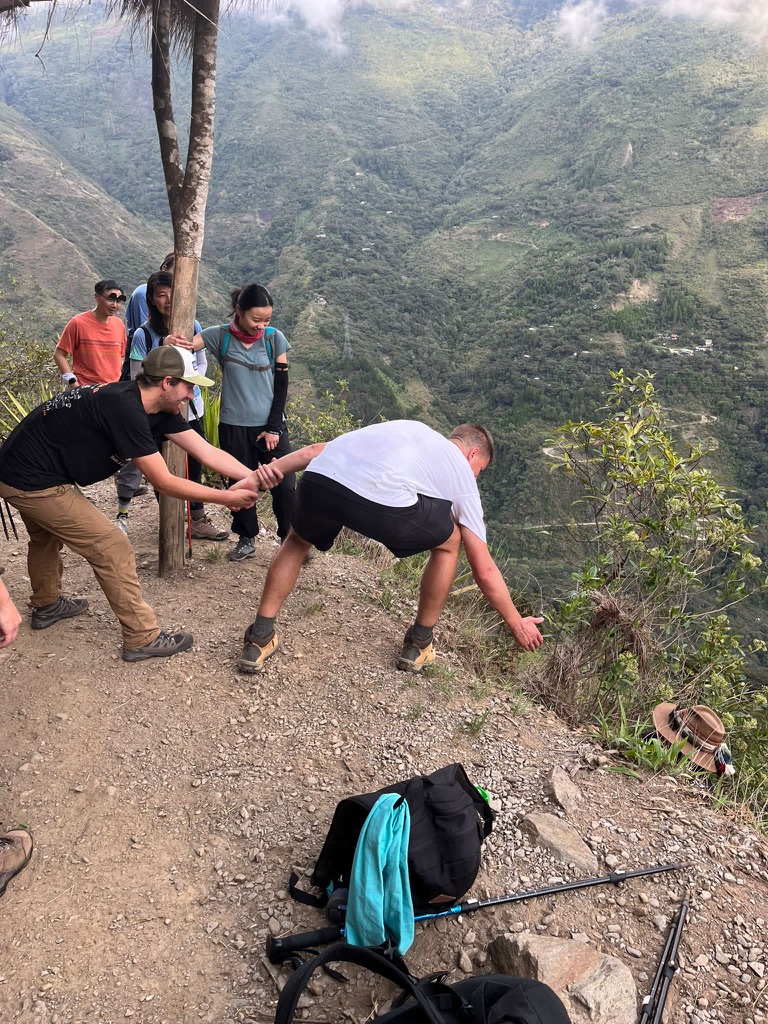
Similar to the fast-forward button on conversation with my new-found friend Marquita, I soon found myself discussing diarrhoea and sourcing pills for our weakened comrades as we sweated our way through hot rainforest hiking for five hours. When they finally succumbed to lying on the dirt floor for a nap, a smaller group of us went to find a phone signal, in the hopes of helping out – another known benefit of exercise, as it dials up our bravery and makes us feel closer with one another.
According to an article from UC Berkeley’s Greater Good Science Centre, not only does regular physical exercise modify our nervous system to make us less prone to fight, flight or fright but the muscle soreness we sometimes experience, caused by lactate, also travels to the brain, reducing anxiety and protecting us against depression, making us feel brave.
Plus, the endorphins or the ‘high’ we so often feel from exercise isn’t just a benefit to ourselves but makes us bond with others. When we experience a collective endorphin rush, such as synchronization through hiking for five days together, it helps us build trust and accelerate closeness. As the article writes, “it’s a powerful neurobiological mechanism for forming friendships even with people we don’t know.”
Two hours into our rescue mission, our guide had managed to find a phone signal and so we took a break to draw face paint on each other with a natural plant dye from the side of the road. We laughed as we posed for the camera with our red design-covered cheeks, an unadulterated feeling of joy after extra hours of hiking in the blistering heat with new friends.

As the support van rounded the bend towards us, carrying our fellow weakened hikers, we cheered from the side of the road at the triumph of being reconnected despite the upheaval of the day.
And while hiking in a beautiful location is far from traumatic, physical challenges are akin to experiences of hardship, which is known to bond people faster. As Dr. Tracey Brower writes for Forbes, we have “a deeper engagement when we go through tough experiences” as it causes “a significant involvement of multiple thinking processes” that make the experiences more memorable plus the people we went through them with.
On the final day, we were lucky enough to board a bus to take us to the top of Machu Picchu, saving our tired legs one last climb. As we gazed over the ancient wonder in front of us, Alex, one of the men on our trip, knelt on one knee and turned to his partner, Vicky, asking her to marry him.
Our entire group erupted in cheers and I felt myself tearing up.
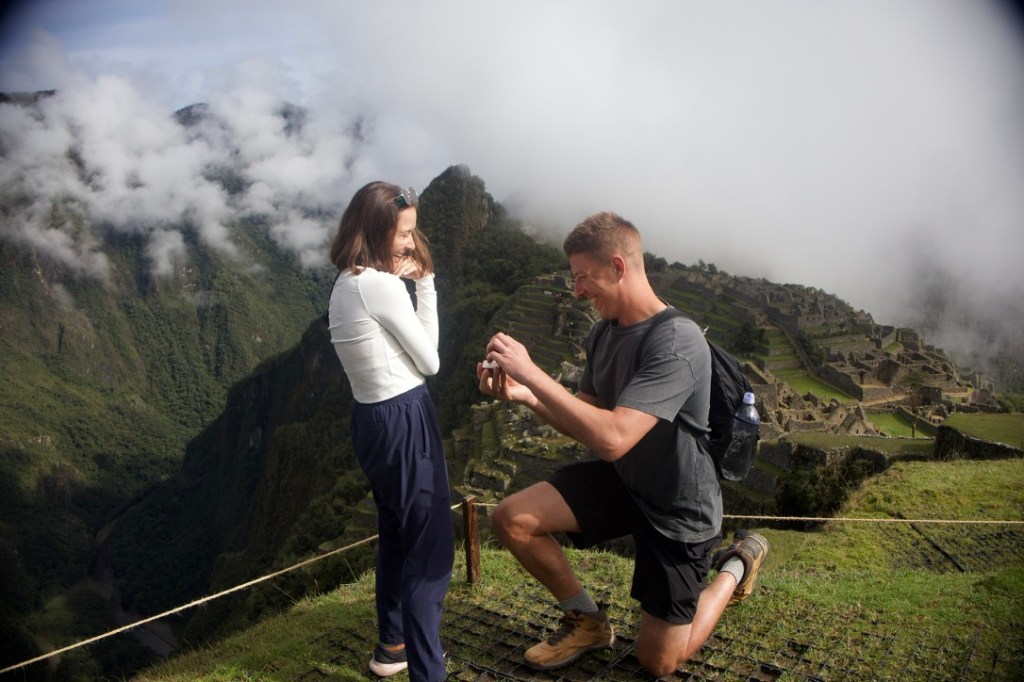
While these new ‘family’ members of mine were temporary, the last five days had proven to accelerate the joy I felt for these people in their highest moments – saying yes to forever – to their lowest – running for the toilet.
And while most of them will just remain Instagram acquaintances, rather than people I call regularly, I wouldn’t hesitate to reach out if I ended up in the same part of the globe with them again. If we can get to diarrhoea talk on day three of meeting the first time, I have no doubt the shared memories would accelerate the reunion chat.
 Burton Steps Out | Travel Blog & Portfolio
Leave a comment