
The Barranco Wall stood before us like a fortress. Ant-like figures wound their way up its side, while others sat perched in between crevices with huge luggage sacks balancing on their heads.
To my left, a group of porters all perched on individual rocks, enjoying their last moments of phone connectivity. A random section of the trail allowed them to connect with the world down below – their families, lovers and anyone else they left behind as they headed towards the clouds.
It was day four on the Lemosho Route on the way to the roof of Africa: Mount Kilimanjaro.
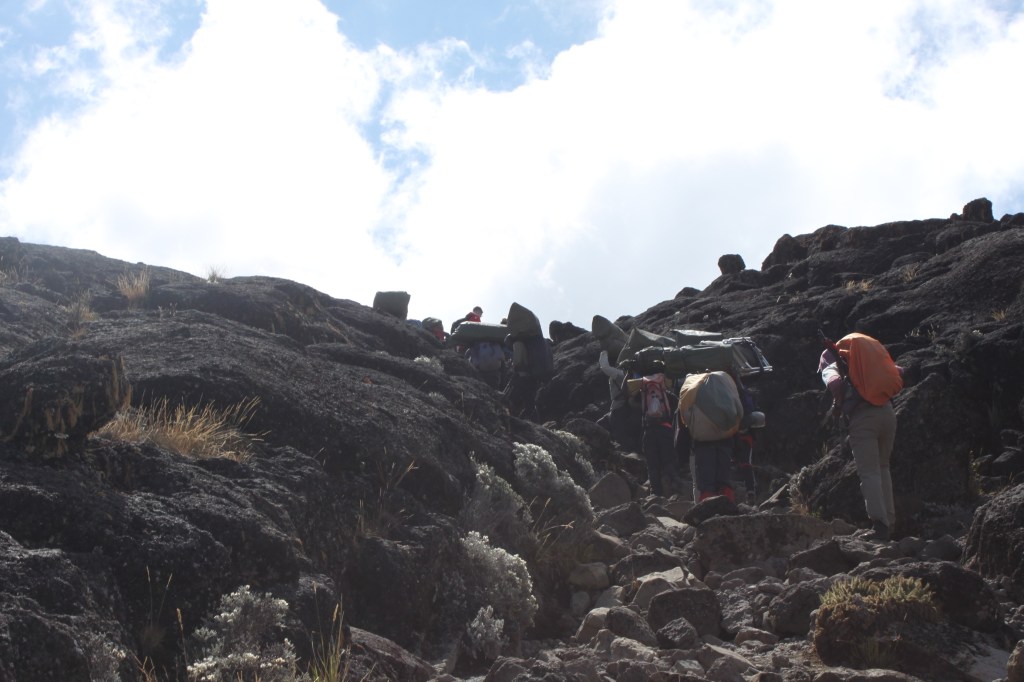
Porters lift heavy sacks in between precarious rocks up the side of the Barranco Wall.
Only four days remained past the impenetrable fortress before us, as we traversed rocky landscapes to climb 5,895 metres into the clouds towards the summit. But it wouldn’t be long enough, with the diversity of landscapes we weaved across from the humid rainforest zone peppered with Colobus monkeys to the more barren moorland and alpine landscapes higher up.
The mountain’s approachability makes Africa’s peak — officially one of the Seven Summits — high on many adventurers’ to-do lists. It’s so accessible that travel companies offer it as an open group trip, suggesting prior experience but rarely verifying it. There are no entry requirements beyond time and money; fitness and health are left to the climber’s own judgment. While heart rate and oxygen levels are checked daily on the mountain, by then, you’re already deep among the rocks and rubble.
As such, it’s become Tanzania’s tourist mecca, marketed as a thrilling yet achievable challenge for both first-time mountaineers and seasoned climbers alike.
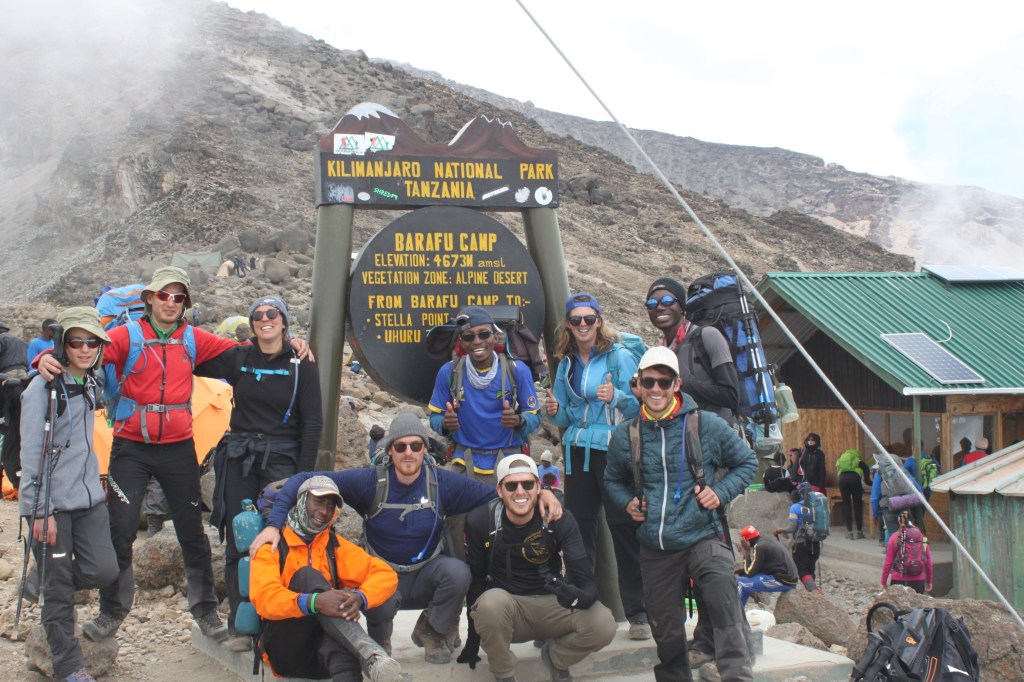
Our trekking group was a mix of friends and families that got to know each other more and more each day.
According to Statista, Kilimanjaro National Park had 47,500 visitors across 22/23, a 58.3% rise post-COVID, but still lower than the record peak of 57,456 visitors on 11/12. There are over 80 operators to choose from and approximately 10,900 individuals are employed annually in roles such as porters, guides and cooks. The park generates an annual tourism revenue of around $50 million for the country.
Going into this adventure, and with some previous altitude experience, I chose one of the longest routes possible to give myself a chance to acclimatize and the best chances of summiting. A feat that only approximately 65% of climbers manage each year. But while my route was still only eight days, many rush to the summit with trips as short as five – making it even harder to summit the final breath-taking metres.
The wildly popular Marangu route (nicknamed the ‘Coca-Cola route’) is so populated now, it has become a budget-lover’s dream with trips lasting only six to seven days for an accessible $1,500-2,000 USD. Or the Shira Route which catapults you to 3500m on day two, a feat to acclimatise for the average layperson before trying to recover the day before summit by walking the relatively flat Karanga Valley. But of the seven established routes – Marangu, Machame, Lemosho, Shira, Rongai, Northern Circuit and Umbwe – many overlap with similar features. The Barranco Wall and ominous sounding Lava Tower both feature on Lemosho and Machame and Shira ultimately joins Machame.
But with each pole pole (Swahili for “slowly, slowly”) step, I looked around at a mountain longing to be explored and cherished. As each day passed, I discovered the joy in the journey itself — a trail shaped by the footsteps of thousands, now etched with our own shared stories. There were the laughs and spontaneous dances with our crew of twenty-plus porters, the quiet camaraderie built over long days, and the small triumphs of scaling a rugged mountain where at times we kissed the rock face, shimmying across narrow ledges. This mountain was woven with tales of bravery and risk — stories a hurried summit bid would only overlook.
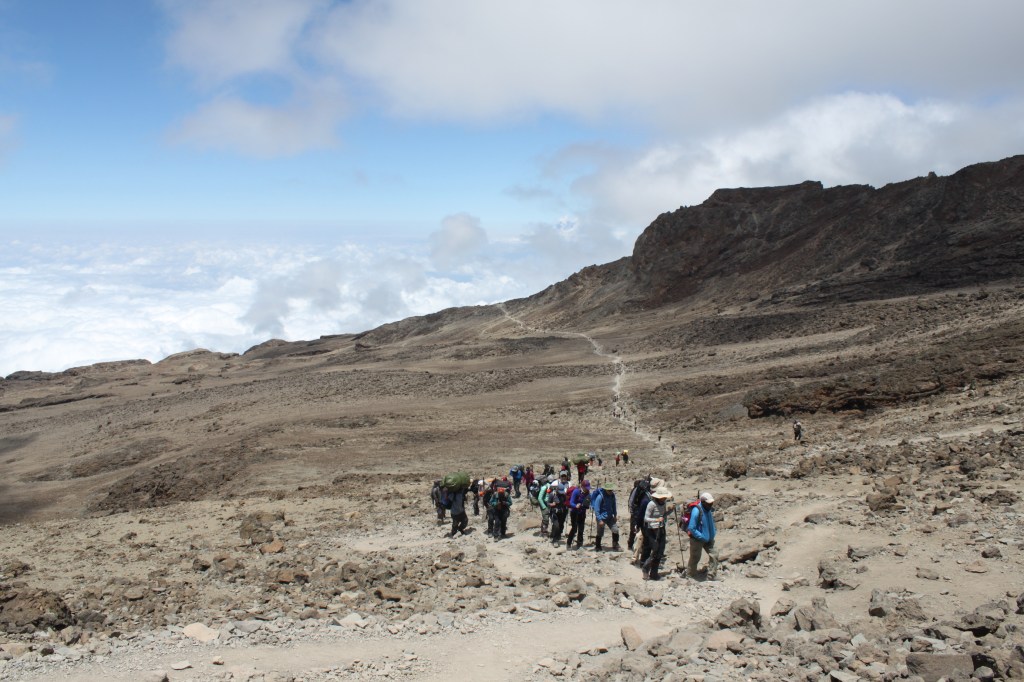
Long days of walking left a lot of time to soak up the atmosphere and speak with our fellow trekkers and crew.
Ema, our fearless group leader, motioned us forward to join the surge of porters, guides, and trekkers preparing to tackle the Barranco Wall. By day four, his motto was etched into my brain: Pain is temporary, pride is forever. It looped in my head alongside his impromptu renditions of Alicia Keys’ Girl on Fire, both keeping me going as the daily fatigue set in.
Our tourist group was a mixed bunch — a father-son duo from Albania and three Norwegians in their early twenties — but it was the 24-man crew who became the true heartbeat of the trip. Quite literally at times: they greeted us at each campsite with traditional African songs (and the occasional Maroon 5 chorus), breaking into dance circles with infectious rhythm and joy, each adding their own unique spin.
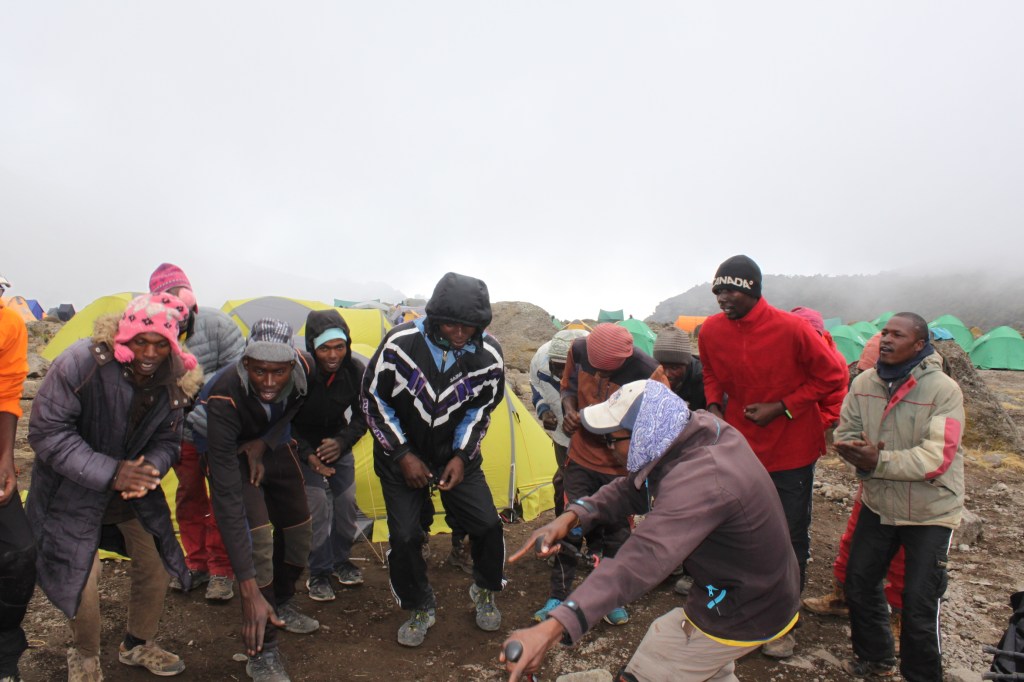
The crew singing and dancing at a campsite one night, led by Ema – our fearless leader – who was the most energetic of them all.
On day five, we had a shorter half-day hike as the altitude increased and the oxygen thinned. By mid-afternoon, our tents were pitched, and in the warmth of the afternoon sun, they turned into miniature saunas, perched on the mountainside. As the sun began to set, the clouds rolled in — and suddenly, we were perched above them. I’ve never known stillness quite like that moment: watching the sun slip beneath a blanket of white, far below us, as we sat — almost suspended — thousands of metres high in the sky.
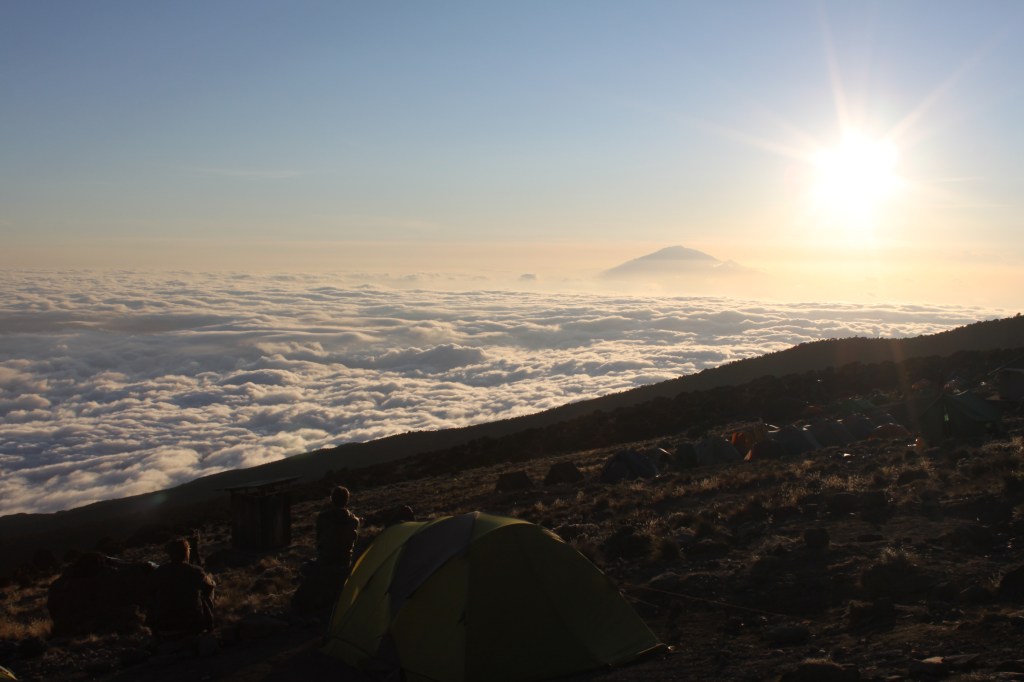
I’ve never quite known stillness and serenity quite like this moment, perched high above the clouds on the side of Mt Kilimanjaro.
On the day before the summit, Rasta — who had become both my friend and fellow comrade in these few days – was told he’d be joining the smaller crew attempting the summit. I became accustomed to Rasta’s soft cooing wakeup call in the morning, as he appeared at our tent, offering teas and coffees before we even had to leave our sleeping bag – it was an indulgent luxury I will always be humbled by.
This would be his first time summiting Mount Kilimanjaro, serving as a less regular crew member and assistant on the trip. You could see the pure joy in his eyes, and I was quietly impressed by his enthusiasm when, at 1 a.m., we began the final climb.
At this stage, we had become intimately connected with our group, the dinners around the table more lively, sharing stories of our lives off the trail. The effects of the mountain hitting us as the urge to urinate became more frequent, the headaches more vibrant and the lack of sleep more apparent. Mix that in with cucumber and watermelon spewed on the side of the mountain and I think it’s fair to side we exposed sides of ourselves we’d normally keep hidden.
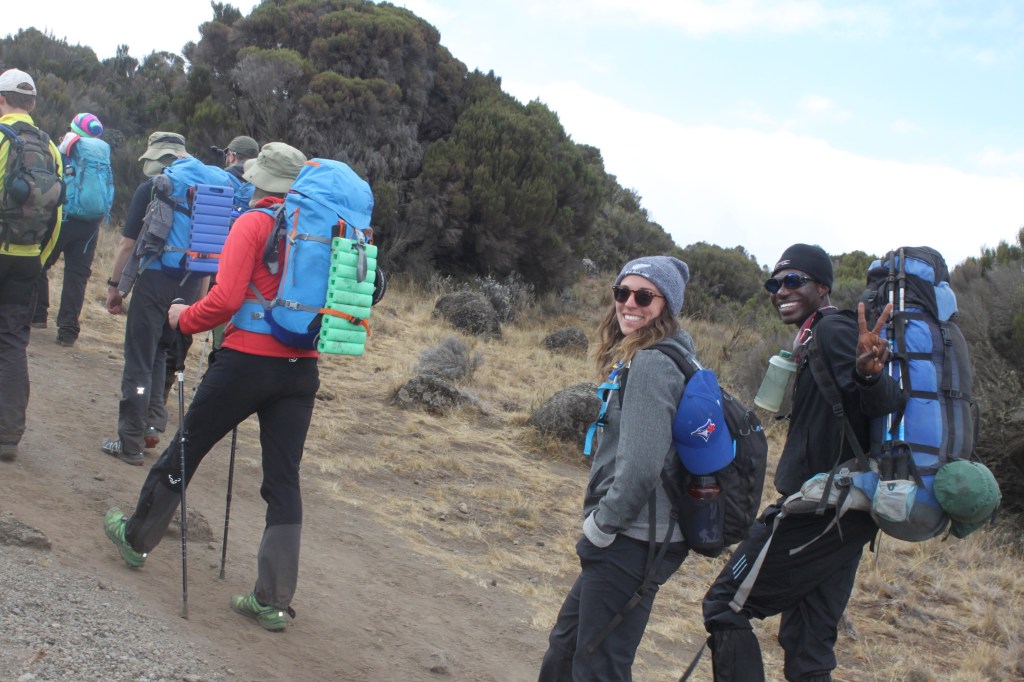
It felt like so much had already happened to get us here. The summit — and the grueling six-hour uphill walk — was just one moment in a much longer journey of introspection, camaraderie, and resilience.
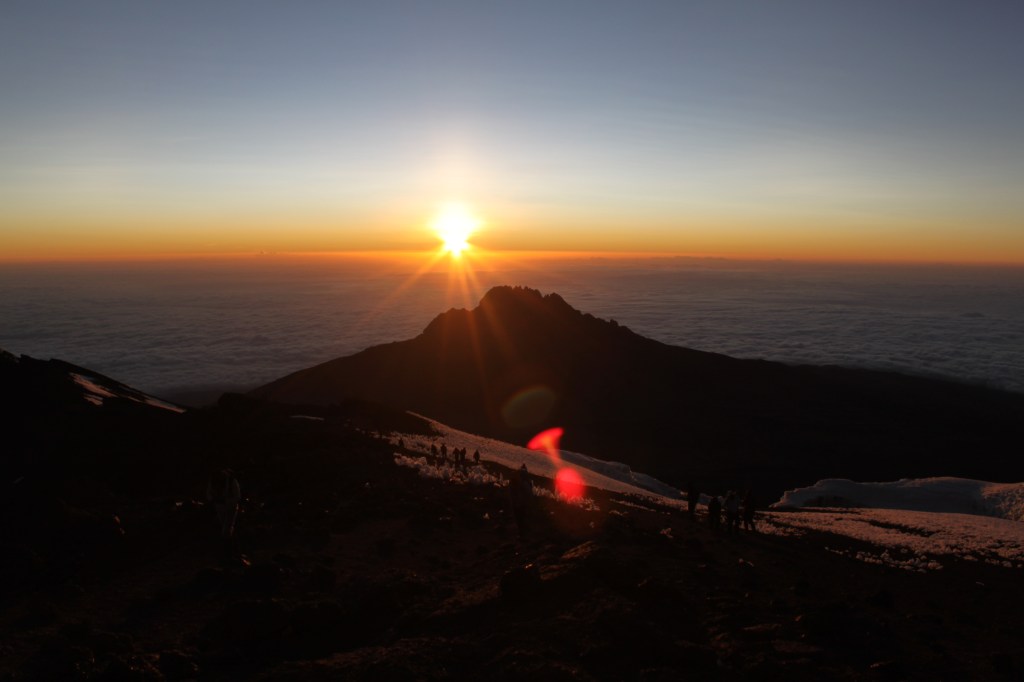
I won’t pretend that standing at the “top of Africa” as the sun rose in sync with our final steps wasn’t anything short of magical. When I looked over and saw Rasta perched on a rock, gazing out over the dormant volcanic crater, he radiated the same calming stillness I’d felt days earlier, watching the clouds roll in beneath us.
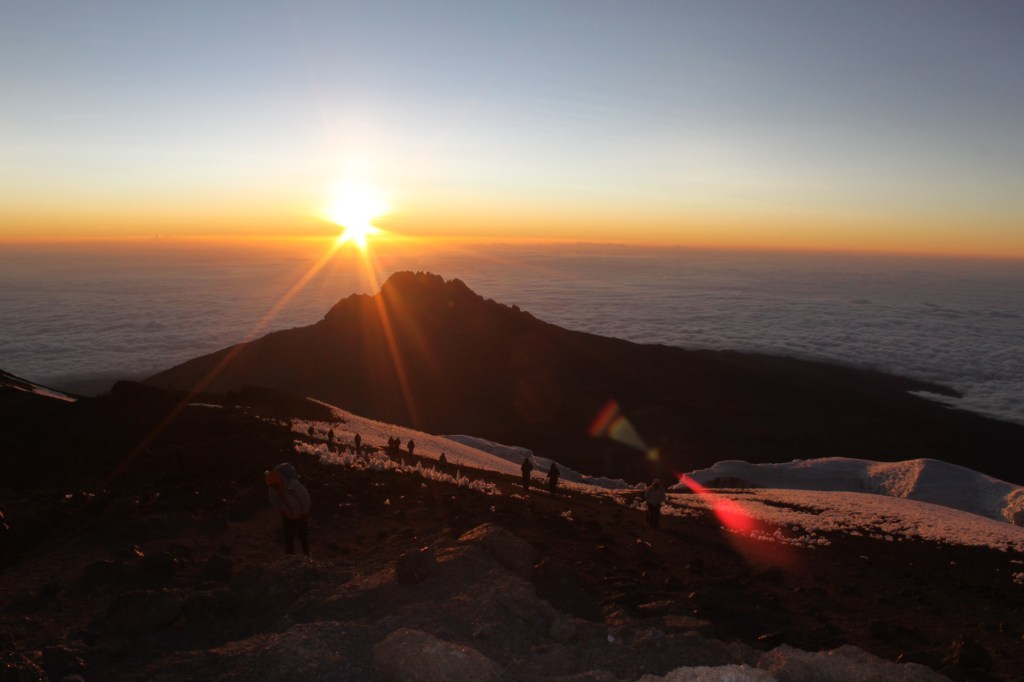
I won’t pretend this moment wasn’t truly magical as the sun rose above the tip of Mt Kilimanjaro.
We spent fifteen joyous minutes at the summit, soaking it in, snapping our photos of accomplishment — and then it was time to descend. The journey down took a sixth of the time it took to climb up. Compared to the deliberate pole pole ascent of the past seven days, the summit felt like an instant. We’d completed the final feat — but for me, we had conquered far more.
We all took different paths, each alongside an assigned porter, making our way down the mountain at our own pace. As we arrived back at high camp, we congratulated one another and thanked our guides for getting us to the summit — a true moment of revelry.
The rest of the day was a swift descent, each step easier as the altitude dropped and breath returned to our lungs. There’s always a moment, near the end of an adventure, where joy and melancholy intertwine — you’re still glowing from what you’ve just accomplished, but already feeling its ending settle in. That’s how I felt as we dropped metre by metre, my legs lighter, my breath easier, and my thoughts slowly turning to the warm shower that awaited me back in Moshi.
As we passed through the final gate of our trek, I was both exhausted and happy — not just from reaching the summit, but from everything that came before it. The memories, the moments, and the meaning found in the slow, shared journey left a deeper mark than any single peak ever could. Eight days felt long, yet somehow never long enough — not to absorb the changing landscapes, nor to gather all the stories that unfolded or might have been told. More than anything, the mountain offered a quiet reminder: to slow down and savour the journey itself — not just the summit.
 Burton Steps Out | Travel Blog & Portfolio
Leave a comment